
Smart Glasses Face Growing Backlash as Privacy Fears Mount
Meta Battles Privacy Backlash as Samsung Prepares Smart-Glasses Debut
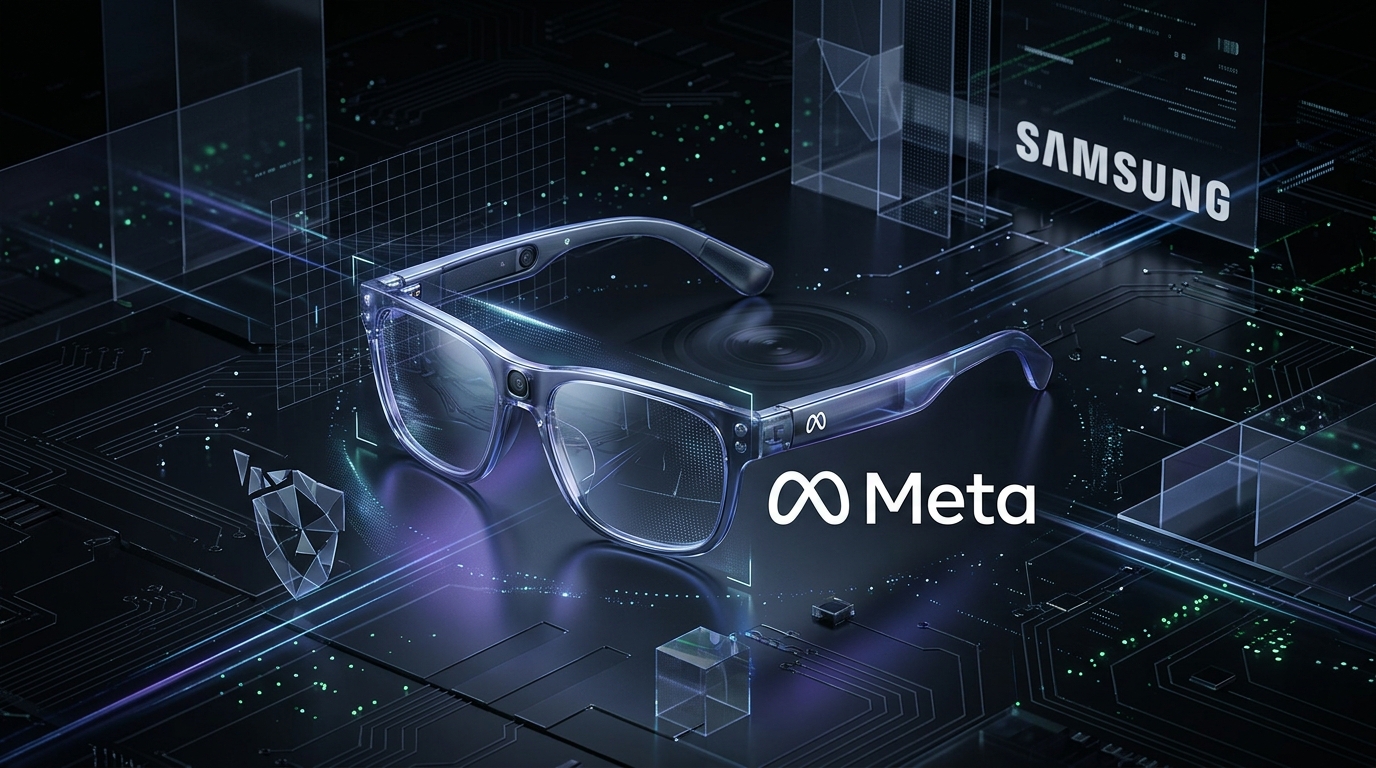
Meta Battles Privacy Backlash as Samsung Prepares Smart-Glasses Debut
Key Takeaway:
AI hardware makers are exploring glasses, pins, pendants, and phone-mounted recorders as alternatives to traditional devices.
Privacy concerns could slow the adoption of AI wearables, despite hopes they may eventually replace smartphones.
Meta’s Ray-Ban smart glasses have emerged as the leading mainstream AI eyewear product.
The glasses are facing lawsuits and criticism over covert recording, consent, and personal anonymity.
UK venues, including Wetherspoon pubs, have introduced restrictions on smart glasses use amid growing public concern.
Companies envisioning AI devices as the foundation of a post-smartphone era are encountering growing privacy concerns that could hinder global adoption. Wearables capable of seeing, hearing, and responding to their surroundings have sparked particular criticism, with Meta’s Ray-Ban smart glasses at the center of the debate. Developed with EssilorLuxottica, the glasses helped bring AI-powered eyewear into the mainstream by combining fashionable design with Meta’s artificial intelligence.
The glasses have raised concerns about covert recording, consent, and the loss of personal anonymity. They have faced scrutiny in privacy lawsuits, criticism from users and restrictions at several UK venues, including Wetherspoon pubs. Meta is also reportedly considering camera-free smart glasses, highlighting the difficult balance between developing useful products and reassuring a skeptical public.
In response, technology companies are exploring alternatives such as pins, pendants and magnetic voice recorders that attach to smartphones. While some of these devices are gaining traction among businesses, consumer adoption remains uncertain. The way companies address privacy concerns could determine whether AI wearables become the next major computing platform—or whether features such as always-on cameras, microphones and environmental awareness prevent them from achieving widespread popularity.
Samsung Bets on Partnerships to Break Into Smart Glasses
Samsung is expected to enter the smart-glasses market later this year with products developed alongside Gentle Monster and Warby Parker. Unlike some competitors, the company does not present these glasses as replacements for smartphones. For startups in the sector, however, resolving privacy concerns may be crucial to their survival.
Startups Turn to Camera-Free Wearables to Win Public Trust
The privacy backlash against smart glasses is driving companies toward camera-free alternatives. Even Realities, a Shenzhen-based startup founded by former Apple engineer Will Wang, launched its camera-free G1 glasses in 2024 and introduced the flagship G2 in November 2025. Wang said consumers increasingly associate smart glasses with covert recording, adding that cameras should be introduced only after stronger privacy safeguards are in place. Valued at $1 billion in July, the company expects to end the year with several hundred thousand users, around 90% of whom are consumers.
Other companies are making recording more intentional and visible. San Francisco-based Pocket’s phone-mounted recorder requires users to press a button before capturing conversations, helping address privacy concerns about audio-only devices. Pocket said about 170,000 devices were in use eight months after launch, including at DoorDash, Michelin, and Santander. Plaud has also prioritized privacy with its $249.99 Plaud One Explorer Edition, which records only when activated and alerts nearby people with lights or an audio announcement. The company has 2.5 million users and more than $100 million in annual recurring revenue.
Ali Merchant is a seasoned financial markets professional specializing in technical analysis, treasury & capital markets, trading, research, and fund management. He is Strategic Advisor at Musaffa and Founder of TWT Learning, which provides education, research, and advisory services to fund and hedge managers and family offices. Ali has traded FX, FX options, US stocks & options, indices, commodities, oil and metals futures, and holds a CMT charter with memberships in AAPTA and CMT, US & Canada. He has worked with ABN AMRO, Thomson Reuters/Refinitiv, MAK Allen & Day Capital, and Bridge Information Systems, produced TA reports for Bloomberg and Reuters, and trained 2,000+ market participants across North America, the GCC and Asia.